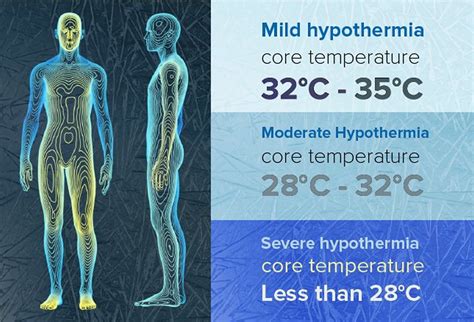
Is 32 Celsius hypothermia
So, 32 degrees Celsius? Yeah, that's a yes. That's moderate hypothermia territory. Your normal body temp runs around 36.5 to 37.5°C. Once you drop below 35°C, you're in hypothermia land. At 32°C, things are already pretty messed up – your body's lost a ton of heat and your systems aren't working right.
What are the stages of hypothermia?
Hypothermia's split into three stages, depending on how low your core temp goes. Each one has its own set of symptoms, and the treatment's different too. Obviously.
| Stage |
Temperature Range |
Key Symptoms |
| Mild Hypothermia |
35°C – 32°C |
Shivering, confusion, increased heart rate, loss of fine motor coordination |
| Moderate Hypothermia |
32°C – 28°C |
Shivering stops, drowsiness, dilated pupils, slowed breathing, irregular heartbeat |
| Severe Hypothermia |
Below 28°C |
Unconsciousness, no reflexes, very slow heart rate, risk of cardiac arrest |
32°C is kind of a weird spot – it's right on the edge between mild and moderate. That's when shivering usually stops, and your body's like "okay, we're just gonna keep the important stuff working."
How does 32°C affect the body?
At 32°C, your body starts slowing everything down. Shivering? That's the thing that makes heat – but it stops around here because your muscles just can't contract anymore. Your brain gets sluggish, you get confused and don't care about anything. Heart and breathing slow down, blood vessels tighten up to save the core. And if you're still out in the cold? Your fingers and toes might start freezing.
"A core temperature of 32°C is a medical emergency. At this point, the body can no longer generate enough heat to warm itself without external assistance. Passive rewarming methods are insufficient; active rewarming techniques are required." — Dr. Sarah Mitchell, Emergency Medicine Specialist
What are the symptoms of hypothermia at 32°C?
The signs at 32°C are way more obvious than when you're just a bit cold. Here's what to look for:
- Shivering's stopped – that's a big one, means your body's heat-making is shot
- You're super drowsy, like you just want to sleep
- Talking's all slurry and weird
- Confused, don't know where you are
- Can't walk straight or use your hands right
- Breathing's slow and shallow
- Pulse is weak or weirdly timed
- Pupils are all big
Can 32°C hypothermia be reversed?
Yeah, absolutely. If you get treatment fast and do it right, you can come back from 32°C. The trick is to warm up slowly – you don't want to mess with the heart and cause problems. Here's what to do:
- Get wet clothes off and put on dry, warm stuff.
- Use active rewarming – blankets, heating pads, warm water bottles on the chest, neck, groin.
- Give them warm drinks – no alcohol or caffeine – if they're awake and can swallow.
- Get to a hospital fast. They'll use warm IV fluids, heated oxygen, maybe even blood rewarming.
What is the difference between 32°C and 35°C hypothermia?
The jump from 35°C to 32°C is huge. At 35°C, you're still mild – shivering's going, you're alert but confused. At 32°C, you're moderate – shivering's gone, you're drowsy, and your heart's at risk. Check out the table:
| Feature |
35°C (Mild) |
32°C (Moderate) |
| Shivering |
Present, often intense |
Absent or minimal |
| Consciousness |
Alert but confused |
Drowsy, may be difficult to rouse |
| Heart rate |
Increased |
Decreased, risk of arrhythmia |
| Treatment urgency |
Passive rewarming often sufficient |
Active rewarming and medical care required |
Frequently Asked Questions
Is 32°C hypothermia life-threatening?
Yeah, if you don't treat it, it can slide into severe hypothermia and kill you. Your heart could stop. Get help.
How long does it take to develop hypothermia at 32°C?
It's not instant. Depends on wind, wetness, how long you're out there. In cold water? Minutes. In air? Could be hours if you're not dressed right.
Can you survive hypothermia at 32°C?
Yep. Most people bounce back if they get warmed up right and get medical care. Just be gentle, don't trigger a heart problem.
What should I do if someone has a temperature of 32°C?
Call 911 right now. While you wait, get them inside, take off wet clothes, cover them with blankets. No alcohol. Don't rub their arms or legs. If they're out cold, check breathing and pulse, be ready for CPR.
Résumé court
- Classification : 32°C est une hypothermie modérée, entre la phase légère et sévère.
- Symptômes clés : Arrêt des frissons, somnolence, confusion, ralentissement du rythme cardiaque.
- Urgence médicale : Nécessite un réchauffement actif et une prise en charge hospitalière immédiate.
- Réversibilité : Oui, avec un traitement approprié, la survie et la récupération sont possibles.
Related articles
Recent articles
